Etsy Inventory Tracking Spreadsheet: Track Stock, Costs, and COGS
November 11, 2026
Written By team taxnookly
Our goal is to provide reliable, helpful, and up-to-date content based on practical tax and bookkeeping principles.
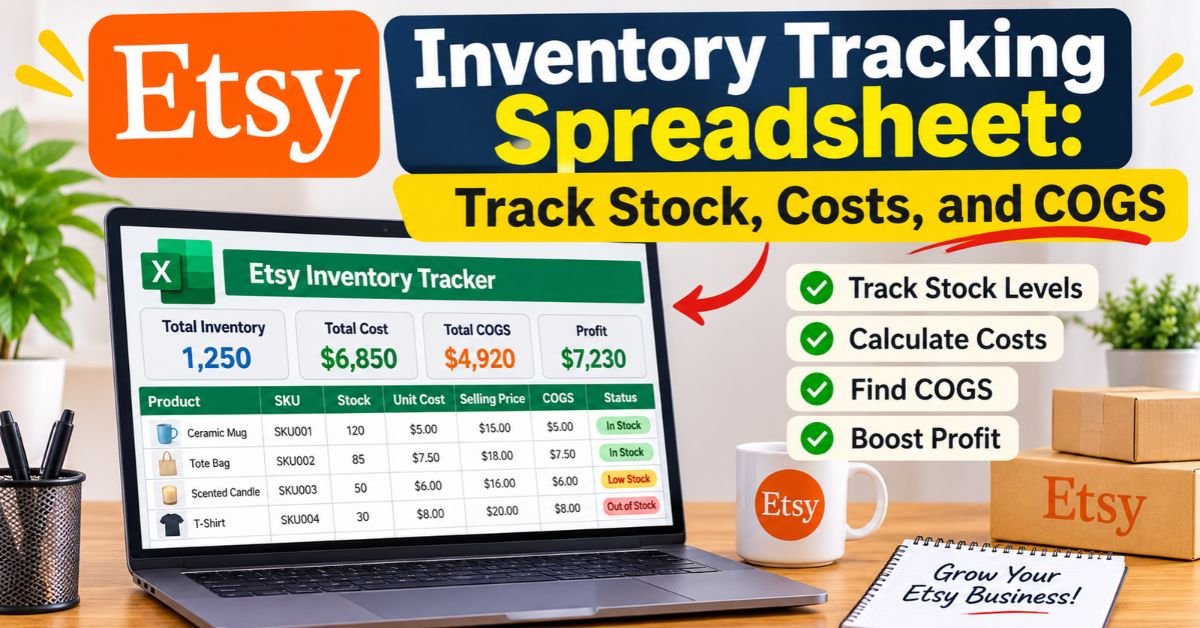
An etsy inventory tracking spreadsheet is the simplest way to separate what you spend on products from what you spend on running your shop. In this guide, our team at Tax Nookly walks you through the setup step by step. Then we show you how the numbers flow into your Schedule C for tax year 2026.
Quick answer: An Etsy inventory tracking spreadsheet logs what you buy, what you sell, and what stays on your shelf at year-end. Sole proprietors use these numbers to calculate Cost of Goods Sold (COGS) on Schedule C. Some small sellers may qualify for simpler inventory rules, so check the current rules on IRS.gov before you file.
Why Etsy Bookkeeping Needs an Inventory Tracking Spreadsheet
Money moves in and out of your shop all year. As a result, personal spending and shop spending can blur together fast. Etsy shows your sales and fees, but it does not track what you paid for supplies. It also cannot tell you what still sits on your shelf. You need your own system for that.
Many sellers choose a spreadsheet because it costs nothing and gives full control. Besides, it keeps every record in one place. When tax season arrives, you open one file instead of digging through hundreds of receipts.
An inventory sheet is only one part of an organized shop record. For a complete walkthrough of tracking Etsy sales, expenses, receipts, and profit, read our complete Etsy bookkeeping guide.
How to Set Up Your Etsy Inventory Tracking Spreadsheet
You do not need macros or paid add-ons. A simple workbook with three tabs works well for most small sellers. First, create these tabs:
Sales Log: Record the order date, item sold, shipping charged, and total revenue.
Expense Tracker: Log platform fees, ads, packaging, and shipping labels when you pay for them.
Inventory Tracker: List raw materials, blank items, or finished goods. Add the quantity and the cost per unit.
Next, keep each category separate from day one. That habit prevents confusion later, especially when you fill out IRS forms. Also, save a receipt for every purchase and note its date in your sheet. The IRS explains good recordkeeping in Publication 583, Starting a Business and Keeping Records.
Operating Expenses vs. Product Costs on Schedule C
Many online sellers dump everything into one expense column. However, the IRS treats product costs differently from general operating expenses. Product costs, such as fabric, beads, or blank mugs, go into Cost of Goods Sold. Operating expenses, such as listing fees and ads, get deducted separately.
Here is how the main categories usually appear on Schedule C:
Expense type
Examples
Schedule C placement
Platform fees
Listing, transaction, processing
Part II, line 10 (Commissions and fees)
Advertising
Etsy Ads, promoted listings
Part II, line 8
Packaging supplies
Mailers, bubble wrap, labels
Part II, line 22 (Supplies)
Raw materials
Fabric, beads, blank items
Part III (Cost of Goods Sold)
Line numbers can change between form years. Therefore, always confirm them in the current Instructions for Schedule C. Also, review this table regularly so you never deduct the same expense twice. If you need help with packaging costs, see our guide to the etsy packaging deduction.
Do You Have to Track Inventory for Taxes?
Not always. Under section 471(c) of the tax code, a “small business taxpayer” may use a simpler way to treat inventory. The IRS sets this status by average gross receipts over the prior three years. The limit rises with inflation, so check the current figure on IRS.gov. You can read more in Publication 538, Accounting Periods and Methods.
Even so, tracking stock still pays off. You see what sells, what sits, and what you spend on materials. Moreover, consistency matters. If you want to switch how you account for inventory, you generally must file Form 3115, Application for Change in Accounting Method. Talk to a tax professional before you make that change.
Cost of Goods Sold Example for Tax Year 2026
Illustrative example, not real data.
Let us see how an etsy inventory tracking spreadsheet feeds the COGS formula. The IRS explains this formula in its cost of goods sold fact sheet. Schedule C Part III uses lines 35 through 42:
Beginning inventory, January 1, 2026 (line 35): $1,200
Plus purchases made in 2026 (line 36): $3,500
Total of lines 35 through 39 (line 40): $4,700
Minus ending inventory, December 31, 2026 (line 41): $900
Equals Cost of Goods Sold (line 42): $4,700 − $900 = $3,800
In this example, you subtract $3,800 from your gross receipts. The result is your gross profit. Notice that your ending inventory of $900 becomes next year’s beginning inventory.
Annual Inventory Count Checklist
Complete these steps around December 31 to keep your 2026 records accurate:
Open or print your inventory tracking spreadsheet.
Count every product, raw material, and supply item in your workspace.
Multiply each quantity by what you originally paid.
Add the totals to find your ending inventory.
Save a copy of the count sheet with your tax documents.
Frequently Asked Questions
Do I need an inventory spreadsheet if I sell digital downloads on Etsy?
Usually not for inventory. Digital files, patterns, and printables do not use raw materials. So you normally have no inventory and no COGS. Instead, you track sales and your digital business expenses.
Should I report total Etsy sales or only bank deposits?
Report your gross sales, including shipping charged to buyers. Etsy takes its fees before it deposits your money. Therefore, your deposits come out lower than your real sales. Report the full amount, then deduct the fees separately.
What happens to leftover supplies at the end of 2026?
Unsold materials and finished goods stay on your shelf as ending inventory. You cannot deduct their cost until you sell them to a customer.
Can I change how I track inventory from year to year?
The IRS generally expects consistency. A change in accounting method may require Form 3115, as explained above. Ask a qualified tax professional before you switch.
Conclusion
A good etsy inventory tracking spreadsheet keeps your numbers clean all year. It separates product costs from operating expenses and makes your COGS easy to calculate. As a result, tax time feels calmer, and you avoid costly mistakes. Start with three simple tabs, then count your stock each December.
Disclaimer
This article offers general education for small online sellers. It is not tax or legal advice. Rules vary by situation and state. For complex inventory or several income streams, consult a CPA or enrolled agent.
Author Bio
About Team Tax Nookly
Team Tax Nookly is a dedicated group of bookkeeping professionals and e-commerce tax specialists focused exclusively on the Etsy marketplace. We simplify complex tax regulations and provide actionable financial strategies to help Etsy sellers manage their businesses with complete confidence.









1 thought on “Etsy Inventory Tracking Spreadsheet: Track Stock, Costs, and COGS”